Snowdirt: Cat versus Cab on Broadway


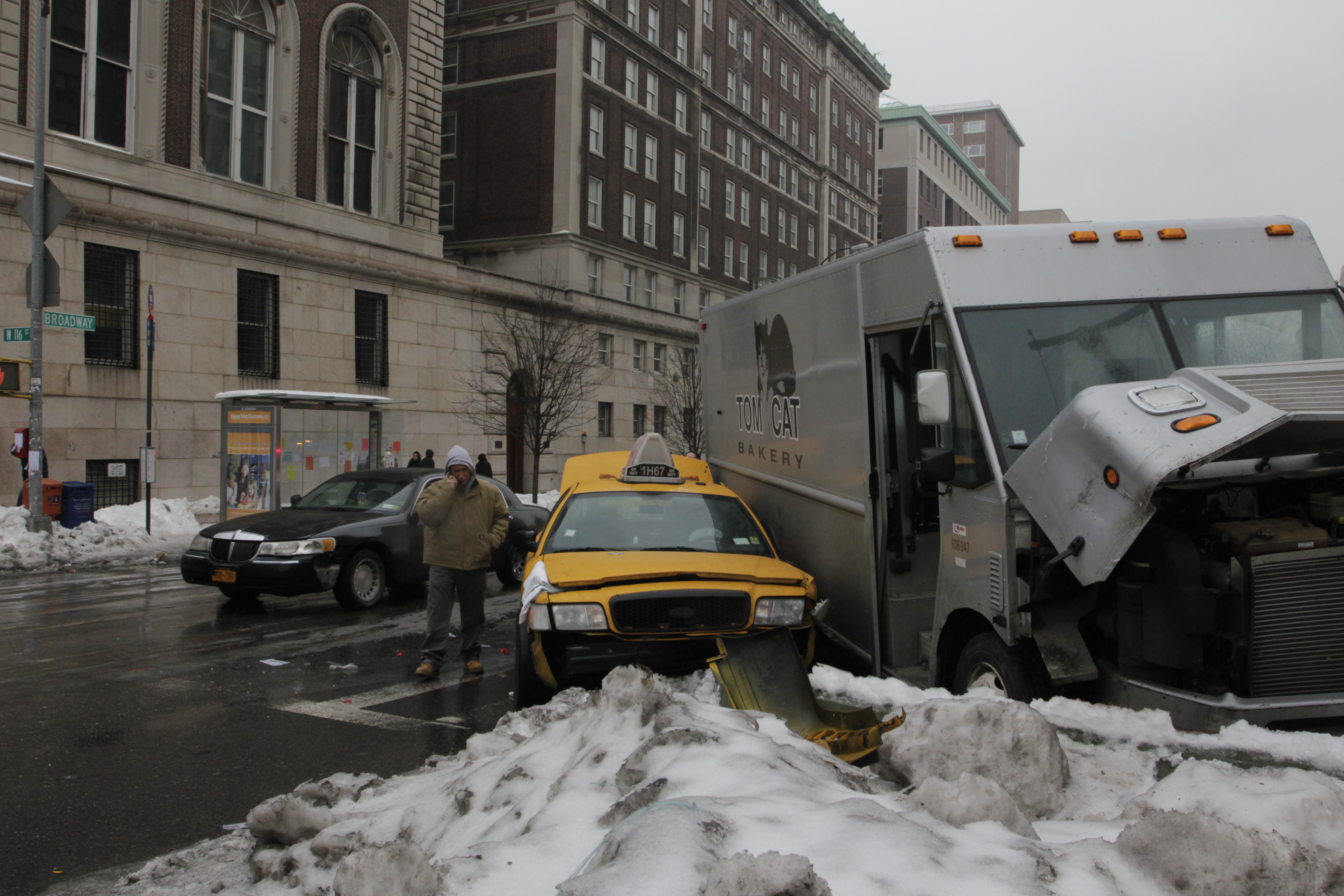
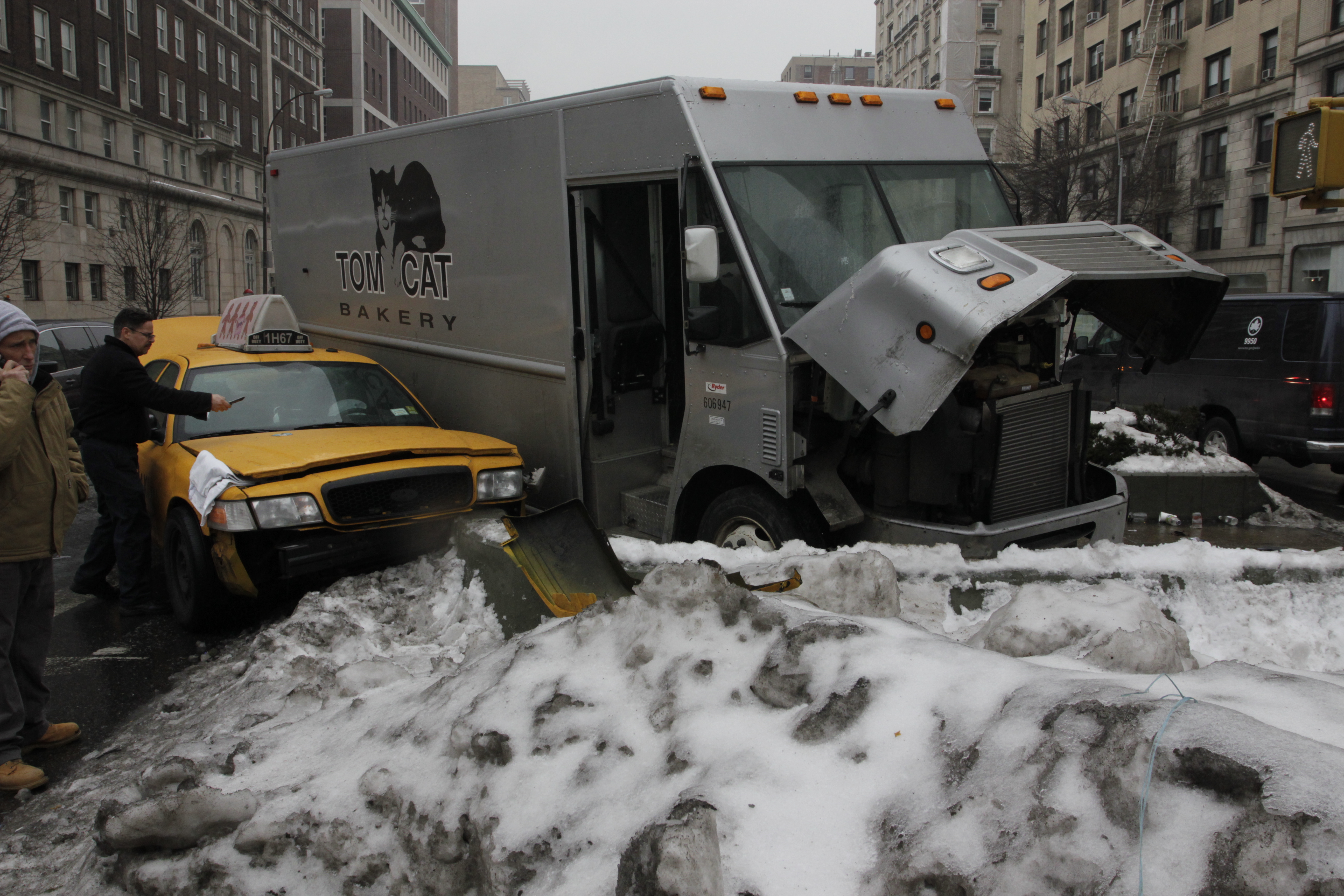
I guess my photo teacher Mel was right. Just carry your camera because you never know when you’re going to get a shot of something cool. The “Tom Cat” sign is what I liked about this shot. I got off the bus to hit up a Saturday morning class and this was the scene near the entrance to school. A big ass box truck with a black cat and a cab driver probably pissed his mid-morning was shot. They both had a bit of explaining to do on their respective cell phones. On a side note: blackened, dirty, weeks-old snow is really some of the ugliest stuff in the world.


“They Mad Because You Fled….”

Strong Black woman. Man, I have so many memories of grade school and Black History Month; the little posters taped to the classroom walls for a month, the book reports and the coating of sugar on the legacies of dozens of fighters for justice. It was all entrenched in a message that freedom is good, slavery and oppression: bad. All my grade school teachers were Italian, I think. Or Polish. Definitely white.

I wonder why whenever they taught us about Harriet Tubman none of them offered to us impressionable youngsters something to the effect: “This was a strong Black woman, guys.”

I’m not sure we understood it via the passages in our Houghton Mifflin textbooks, or the TV documentaries.

So, I offer you here, the strong Black Woman that was Harriet Tubman. This ancestor’s spirit continues to inspire the oppressed and she wasn’t only a voice for Black folks, but for women, period. Listen to Maya Angelou, in her authoritative baritone read about the woman who helped free slaves via the Underground Railroad with a bounty on her head.

Via The National Women’s History Project:

Fugitive Slave, Rescuer of Slaves
Tubman was born into slavery in Maryland. In 1849, she fled to Philadelphia but returned to Maryland the next year to begin the first of many Underground Railroad trips to lead family and friends to freedom using caution, skill, and subterfuge. Some passengers she escorted to Canada. In the Civil War, Tubman was a spy and scout for the Union in the Sea Islands. In 1896, she spoke at the convention of the American National Woman Suffrage Association convention.


For the pop culture treatment of Tubman’s legacy, check these out:

Continue reading ““They Mad Because You Fled….””

Cholos in the Bronx

My amigo Carlos Alvarez Montero is a street photog extraordinaire. He left Mexico to study photography in N.Y. and found the Firme Rydaz while still in school. He made this documentary, and shortly after went back home where he continues to chronicle gangster subcultures. He sets the flix bar  high. I asked him is if was okay if I jacked his sources and wrote about the bike crew for the Bronxink.org where I’m currently pitching stories. The cool guy he is, he gave me all the numbers I needed to make it happen. So, from D.F. to N.Y.C, I’ll add some more cholo pieces to this blog. Photos below from Firme Rydaz Myspace page.

Requiem for Dr. Dre’s Kids’ Music Careers

For those who already know of my obsession with wanting to report on Dr. Dre’s children, I promise this is the last post (unless someone pays me handsomely to do a follow-up, or either Hood Surgeon or Manaj become newsworthy).

When I was on the trail of Hood Surgeon some 4 years ago, I also came to know Manaj (pronounced Mi-NAJ), a woman from Southern California’s San Fernando Valley who also rode the “I come from Dre,” wagon. She was pushing a documentary called Daddy’s Shadow at the time. She even had a little online marketing action going that included a description of the flick:

Daddy’s Shadow is a feature-length documentary centered on my quest to break into the music industry despite my legendary multi-millionaire father’s objections and lack of support.

A-huh. Right.

I got to meet Hood Surgeon, who confirmed that Manaj was his sister. I attempted on several occasions to meet up with her, but each time the plans fell through. I found her a bit more intriguing that the young Curtis McLemore, mainly because of the mess Manaj seemed to be in. She was coming out and saying that Dr. Dre stood in her way and didn’t want her in the industry. Okay. To make matters all the more interesting, she was planning to put out this documentary under a company called Wigga Wreckords, which was run by a guy calling himself Judge M.

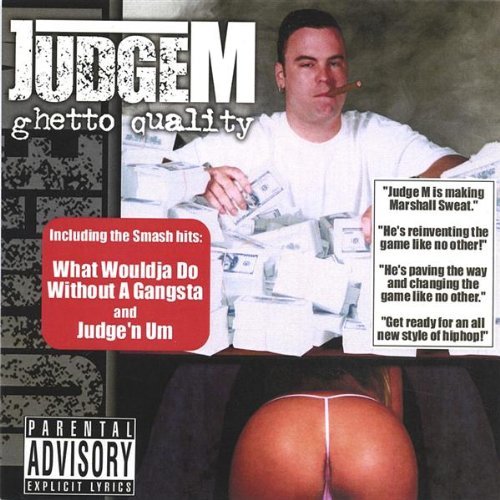
I spoke to Judge M who told me his name was Matt and that he was a computer programmer. He seemed pleasant enough. I could tell he was just trying to ride Manaj’s affiliation to see how far he could go in the industry. Amazon show’s he had a .99 offering entitled “What a Wigga Iz.”  He later got really defensive on the phone when I started to ask him about why he was working with Dre’s daughter, and asked him to respond to her allegations he was somehow manipulating her. Later I saw the cover of his album. This is wrong on so many levels. So many levels.

I wish I was making all of this up. But it’s true.

Just to prove it to you, after the jump is my unedited working draft from this story. Several drafts of it were sent to colleagues and editors whose interest level was something like -10 on a scale of 1 to 10.

Continue reading “Requiem for Dr. Dre’s Kids’ Music Careers”

Study the Light

So, Mel B (not the Spice Girl) is not only my advisor, but she’s also my photo teacher. She clowned me today by saying in class, “I didn’t even finish Uni, and I’m advising Masters.” Yeah, self-taught Pulitzer Prize-winning photog.

She’s a trip, and  super fantastic at what she does. Her teacher skills are above average. Easily. She’s got the ill New Zealand accent that makes “tools” sound like “tours”. She can curse up a storm, too. These pages are from the book Basics Photography 7 by David Prakel. Purchase a copy of this very good nubie guide, here. On the first day of class Mel went in hard, hitting us up with the mathematics, God. Doubling and halving, doubling and halving. I’ll figure it out.

The Thing When It Snows

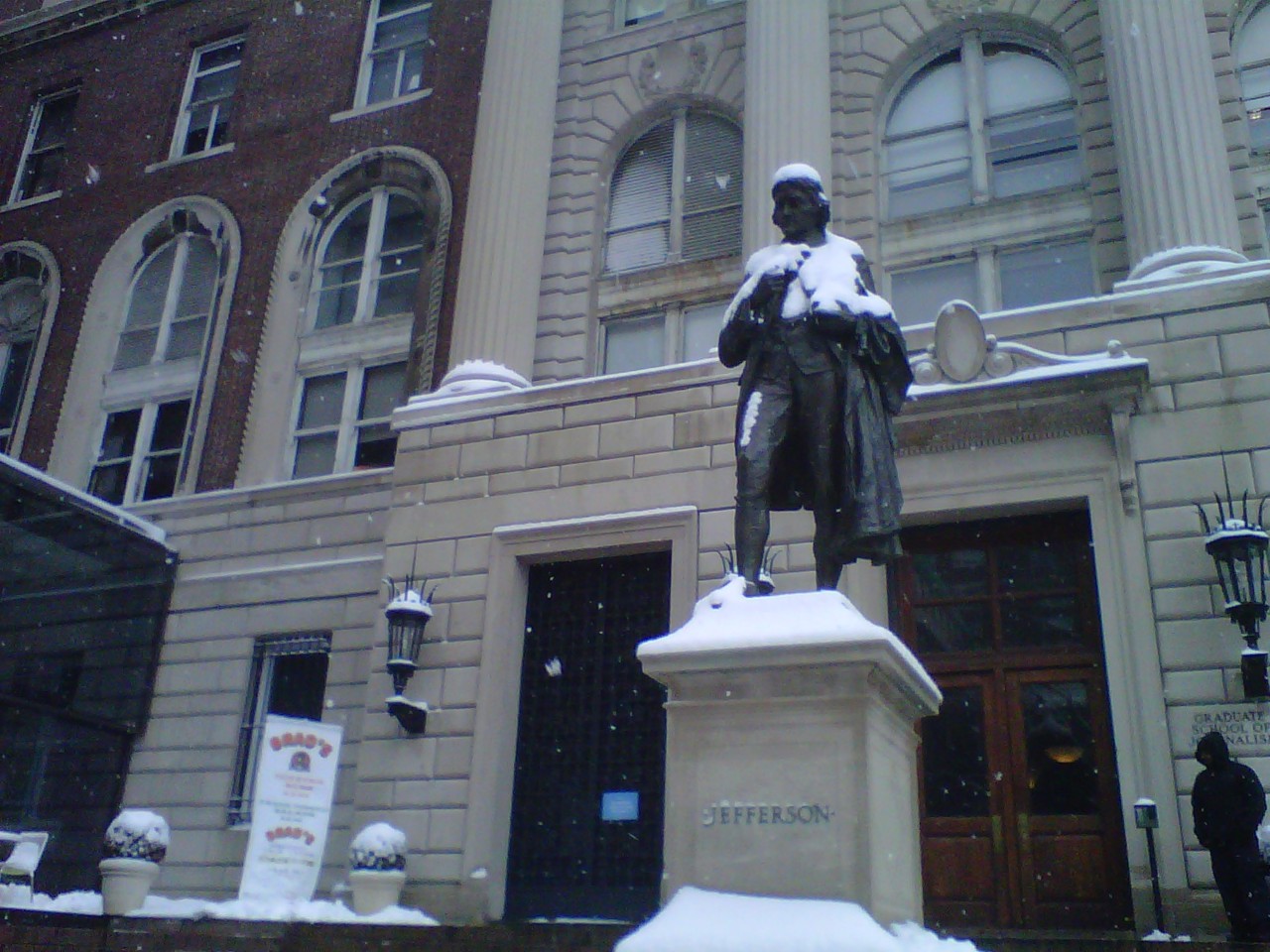
I personally don’t think most people mind the snow. As I write this another blizzard is smacking the city in the face. Freezing speckles of ice that melt when they hit your coat. The shot here was from earlier in the day, when much of the snow on the ground just looked like a dirt and sewer-colored slushy. Slippery and dangerous if you have a bad hip, or need a walker. By midnight, even the delivery guys had to dismount their bikes. The snow was wet enough that it stuck and piled up. It’s Masters Project time right now at the illustrious J School, so the editing suites are packed. The hardcore don’t sleep.

On a sidenote, however, all this snow is reminding me of the Antarctic sci-fi horror movie I saw a few weeks ago,  John Carpenter‘s remake The Thing (1982). A midnight screening at the IFC Theater.

Some joints you just have to see on the big screen. The movie is far from a masterpiece, but the shocks and jolts are so well paced, you’ll find yourself jumping at certain parts even when you know you’ve seen this flick 100 times on HBO. Carpenter is a master of the OST, so he knows where to put those synth stabs.

One of the true gems of the movie is Keith David who plays a no-nonsense brother who actually lives until the end (sorry for the spoiler, but shame on you for not knowing this movie already). I didn’t realize the greatness that is Keith David. His gravitas. That voice. He’s a Shakespearean actor too often type-cast as a gap-toothed gangster.

That BK to El Chapo Connect

I didn’t get a chance to publish this book review over on the BK Ink. I got the credit for the assignment, though. Thanks for asking…

This book came out in September 2010
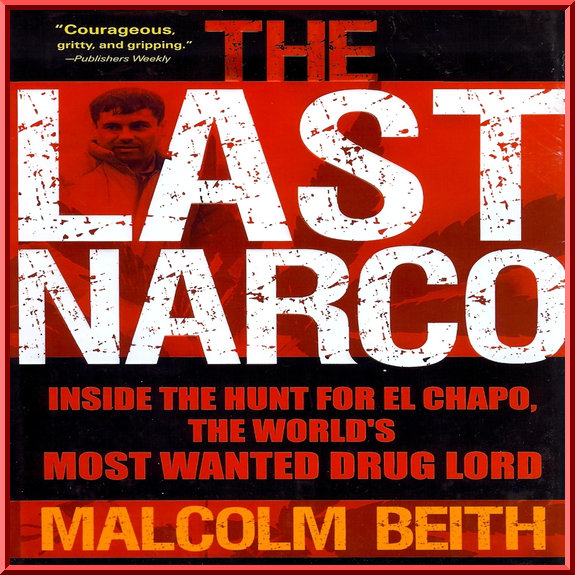
Inside the Hunt For El Chapo, The World’s Most Wanted Drug Lord

By Malcolm Beith
Illustrated. 288 pp. New York:
Grove Press. $24.


Joaquin “El Chapo” Guzman Loera ranks 937 on Forbes magazine’s list of billionaires, and he has a net worth of $1 billion. The magazine calls him a symbol of Mexico’s drug war, a war that’s claimed the lives of journalists, soldiers, police officers, as well as the rank and file of rival drug cartels. This is one of the most violent periods in the country’s modern history with 12,500 lives lost this year to narco violence. With Guzman Loera celebrated, as a tycoon of sorts, what he actually comes to symbolize isn’t just Mexico’s out-of-control drug trafficking problem, but modern narco-culture. Guzman Loera, although only 5 foot 6 inches tall is a giant in his mountain village where poverty reigns.


“El Chapo,” as he’s known is the head of the Sinaloa Cartel, one of the top six Mexican drug trafficking organizations working with cocaine suppliers in Colombia and battling for dominance from within the so-called Golden Triangle of narco states: Chihuahua, Durango, and Sinaloa. Since 2006 Guzman Loera has been working against, and according to many, working with the government in a drug war that was initiated in 2006 under President Felipe Calderon. According to the Mexican government, this drug war has killed over 30,000 people in the last four years.


While this level of drug cartel violence hasn’t reached the U.S., the world’s largest market for illegal drugs, Guzman Loera’s product is widely distributed. The Brooklyn federal court unsealed indictments in July 2009, naming several high-level Mexican drug cartel capos including “El Chapo”, or “Shorty” Guzman Loera, in an “international cocaine distribution” conspiracy with ties to New York. Specifically mentioned in the Brooklyn indictment, which seeks a criminal forfeiture of over $4 billion, are members of the drug trafficking alliance called “La Federacion,” or “the Federation,” which included brothers Arturo and Hector Beltran-Levya (the Beltran-Leyva Organization) and Ismael “El Mayo” Zambada Garcia (a strong ally of Guzman Loera), among others. A separate indictment unsealed by the Brooklyn federal court that summer leveled similar drug trafficking charges against Vicente Carrillo Fuentes, the head of the Juarez Cartel.


All of these deadly characters appear in Malcolm Beith’s “The Last Narco,” which spends a lot of time discussing the mythology of Joaquin “El Chapo” Guzman Loera, one of the mavericks of modern day Mexican narcotics trafficking. The son of an opium poppy farmer, he was raised in the hills of Badiraguato, Sinaloa. Guzman Loera moved up the ladder with a lethal hand and a personality for the type of narco-politics that helps drug cartels run smoothly, as least for a short while. Beith spends the largest chunk of his book’s16 chapters writing about Guzman Loera’s infamous escape from a maximum security prison, which caused a nationwide manhunt that, like narco violence and drug smuggling, continues to this day.


In 1993 the Mexican government on drug trafficking and murder charges arrested Guzman Loera, and in 1995 he was sent to Puente Grande prison in the state of Jalisco. Beith details the bribing, the mishaps and the loves the narco experienced while incarcerated. Through interviews and court documents the writer is able to piece together an image of vulnerability and introspection while the drug king pin was participating in 63 psychological counseling sessions at the prison. Guzman Loera starts to come off as a gangster with a heart of gold. Beith writes, “He was also extremely gushing for a man believed to be so emotionally detached… ‘I send you a kiss of honey and a hug that makes you shake from emotion,’ he wrote in October 2000.”


As Beith points out, Mexico is the Western hemisphere’s 5th largest nation. The allure of the money that comes from drug trafficking in Mexico is understandable in some ways due to the odds of survival under typical circumstances. The country has a population of over one-hundred-and-twelve-million people. The divide between rich and poor is sharp and according to government data nearly 50 percent of Mexicans are living in poverty. “Drugs are the only way to get ahead in Sinaloa.” Collectively, cartels have imported 200 metric tons of cocaine, according to federal documents.


Beith writes with detail about some of the methods the drug dealers, including Chapo, who has become most famous for financing elaborate tunnel systems under the U.S./Mexico border. “Smuggling was simple: the cocaine was placed in the false bottom of two trailers, which would deliver the drugs to a warehouse in Tucson, Ariz. From there, the goods would be distributed to U.S. counterparts.”


Of the top cartels operating in Mexico, there’s the Sinaloa Cartel, part of the Federation, the Gulf Cartel and Los Zetas who want to kill Guzman Loera and take his turf. Other cartels with extensive operations in Mexico, the U.S. and further into Latin America include the Tijuana Cartel, the Beltran-Leyva Organization, La Familia Michoacan and the Juarez Cartel, which runs the coveted Ciudad Juarez drug smuggling route.


The movement of such large quantities of drugs requires greasing some palms, as corruption of police and government is another powerful force in the drug war. Guzman Loera’s escape from prison cost $2.5 million in bribes according to sources Beith interviewed. The cartel leader also had to turn on another drug organization, and he give up the Arrellano Felix Brothers who ran the Tijuana Cartel. In the end, it was as easy as jumping into a laundry basket and heading for the door. A friendly prison guard helped him escape.


In 2005, while the manhunt for Guzman was still underway, he made inroads into a new area of drug sales, methamphetamine distribution.  One of the strengths of the reporting is Beith’s precision with the numbers. Items he likely got from his DEA sources. “From $10,000 in chemicals, they could make $100,000 worth of meth,” he writes referring to Guzman’s overhead.


On of he main points in Beith’s biography on  “El Chapo” Guzman Loera, is the cycle of political corruption that facilitates the fugitive’s freedom. A few thousand dollars in the right hands and people with power look the other way. Narco politics goes hand-in-hand with police and military corruption and helps shape the future of the drug war. “I’m convinced that to stop crime, we first have to get it out of our house,” Beith quotes Mexico’s Calderon.


In 2006, President Felipe Calderon took office amid allegations of electoral fraud and focused his attention on stemming the growth of narco-trafficking. Last month, when WikiLeaks released U.S. diplomatic cables, several mentioned the fear of  “ ‘losing’ certain regions,” to the drug cartels, according to one document, and that the Merida Initiative, a $1.3 billion anti-drug trafficking plan backed by President Obama’s administration was lackluster.


The drug war has inspired a body of work that includes abstract art and movies such as this year’s successful Mexican dark comedy, “El Infierno,” about the effects of narcotics smuggling on a small town. Earlier in the book, Beith gives better context for how his own work should be viewed. “There’s a whole world connected to the narco, and it’s not just the songs and the clothing.”


“The Last Narco,” isn’t an assessment of who will lead the next great Mexican cartel, nor is it purely about the manhunt for Joaquin Guzman Loera. This is a piece of narco-literature. There are a couple of sincere disclaimers in the postscript:  The writer, a former Newsweek staffer, says he lied to sources to get information about El Chapo. “This book is not really meant to be an investigation,” he writes, “I have no desire to wind up dead.”

-30-


Corridos Found in Translation


So the homeboy Manny Wheels was looking for the transcription to the corrido we used in our previous video together. He’s crafting a long-form report on the corrido situation in Nueva York, look out for that in a few months. I think he can get it up in the Voice, but we’ll see. Biters everywhere. Best of luck to you Mano.

This is probably not that newsworthy to some, but when a group of this stature (like K-Paz de la Sierra, above) comes to Brooklyn, that’s a rare occasion. If you’re looking for something to say about K-Paz, there’s always the story about how their former lead singer was found hanged with cigarette burns on his body. A narco-style kidnaping/murder for sure.  Not that Brooklyn or NYC is a stranger to narco-style murders.

Big Payback

Today was a proud day for my inner hip-hop journo. The J-School featured not only 1, but 2 intellectual hip-hop heads who took the stage to share their success with the journo-youngstas. Generally, these aren’t the types of cats who are sweated by the academy, but with at least 2 of the journo-youngsters dedicating their Masters work to hip-hop themes, it’s a sign that the mainstream has totally taken the edge out of things. I can’t wait to read these Masters projects.

One of the alums, a man whose career I’ve followed for some time now because of his dedication to hip-hop journalism (in addition to yoga?) has really added some cultural knowledge to the history of the form in his book, The Big Payback. He was interviewed on stage in a private event just for our Spring Prep Day. He explained his book writing process (two hours of sleep while writing his tome and holding down a day gig) and read from his book. His 600 page joint is being heavily touted by all manner of smart opinion makers such as NPR and O-Dubb. The section of his book that he read had to do with Andre Harrell, but since I was mad hungry the only thing that stuck out to me was when he said something about Beefsteak Charlie’s. You’ll have to read the book to figure out what that’s all about.

Do you remember those old Beefsteak Charlie’s commercials?

Continue reading “Big Payback”