
Pinche Beba

For me.
It’s the middle of the end of one chapter, which is about to be over. Many more to close. Classes to finish and new jobs to start.
I got my first paid gig the other day and it was something small, but 50xs the trouble. I got to get close to an icon, some would say.
The president rolled through only a few hours after I snapped this.

To check out Lucha Libre NYC, go to http://www.luchalibrenyc.com
It all started in L.A. I was driving back to the Hollywood area, up along La Brea, North of the hood when I saw a sign written on a piece of box cardboard and pinned to a light pole: “Lucha Libre los Domingos”. Or something like that.
I was an archive librarian at the L.A. Times and all I wanted to do at that point was get my words up in them pages. Besides my moms (HI, MOM!), I’d been inspired and prodded by Samantha Bonar, Daniel Hernandez and Chris Lee, folks I’ve worked with who have been hyper successful with the written word.
At the time, “Nacho Libre,” the Jack Black movie based on an actual wrestling priest had just come out and I knew I could sell a pitch based on the idea of lucha libre in the city. The lucha libre event in an old warehouse in South Central Los Angeles was a regular venue in 2006. I walked in, flashed my press creds and took a seat near a small family who had bought a bunch of pig skins, beer and hotdogs.
I don’t remember every particular match. I remember there was a gay wrestler, a fat wrestler and someone with a costume on, either a panda or a pig or something strange. What I do remember is Mil Mascaras. The legend, the O.G. of a thousand masks. He was there. We spoke. I was a little skeptical, wondering if the guy under the mask was the legend. I looked at this arms, they were the wrinkled, aged arms of a man in his 60s. I glanced up at this chest. It had that barrel shape you only get from decades of pumping iron, his arms had the same sinewy look to them. The dude was old, but he was probably rock solid. I didn’t bother touching him. A Japanese looking man, who didn’t speak English thrust a mask in Mascaras’ face as he left the ring, “Please sign.” The legend obliged. I was shocked that this Japanese dude came all the way down to the hood just to fulfill his fandom.
As it goes the Japanese love professional wrestling. Outside of Mexico, Japan must be the biggest non-U.S. market for American wrestlers, and their Mexican lucha libre counterparts. I’m not a wrestling fiend, but I enjoy the choreographed ballet that ensues when two athletes get into a ring and do choreographed stuntage to the glee of kids and grandmas. It’s still a spectacle that in some parts of the country is less expensive than a night at a cineplex. And more enjoyable in my opinion.
I used my appreciation for wrestling to graduate journalism school. I haven’t graduated yet, but my Master’s Project got some good notice and that’s a major part of getting your Master of Science degree here at the “journalism school of eternal excellence,” a.k.a the House that Pulitzer built.
At a celebration in September, where all of New York City’s Mexican population gathered for the bicentennial of the countries independence I saw a postcard advertisement on the ground. Lucha libre it said in the style of promotion similar to what I saw in Mexico City when I was there. A full card, about 8 bouts. This had to be new stuff here in NYC. I’d never heard of such a thing.
How new it was, I’m still now sure. People other than Lucha Va Voom have tried before to stake a claim in NYC even if it was for a show that was passing through. My aim was to tell the story of a guy who was trying to get this off the ground and the wrestlers he was bringing along for the ride. I think I succeeded in getting this noticed by a few folks around the world, but the project luchalibrenyc.com is still a work in progress. My L.A. homie @thebrianpark is a huge part of this project and I couldn’t have done it without him. His fearless shooting style and dedication to helping to round out this story really produced some solid work, with more to come. So, if you’re a fan of lucha libre, or just like to see shirtless men through each other around, come back often because I’ll be updated luchalibrenyc.com and posting link on this blog.

I think revolution is a good thing. This reminded me that the Young Lords opened their storefront community center in the Bronx this month. There are some things I’d like to report on that, but Jenny 8. Lee did that, you can find it, here.
The good thing about revolutions is that if they’re run by smart folks, there are always papers to be got.
Check out the electronic collection of Young Lords periodicals at DePaul University….
http://eres.lib.depaul.edu/eres/coursepage.aspx?cid=4075&page=docs
Above, the trailer for Rubber. The news of this film, directed by a French DJ, is like summer 2010 old, but I saw this trailer the other day and haven’t heard of the movie showing in the states in any theaters, yet. It’s a movie that really bends the mind when it comes to the concept of character. Can a tire be a character? At the J-School, they’d say no (well, depends…).
Experimental French electro (this time by Mr. Oizo, who directed the movie, and one half of Justice, Gaspard Augé) isn’t my passion, but definitely the music I most like to work to. Thinking about it, from the looks of my work, maybe I need to change soundtracks?
Rubber has some music attached to it that’s definitely worth a listen. It touches on the zeitgeist of electro/industrial/computer noise music that’s been getting mainstream love as of late. Flying Lotus even remixed the lead song on the soundtrack, adding his Lotus-ness to the noise. You can listen to choice cuts from the soundtrack by following this link and scrolling to the bottom of the post. My favorite cut is Tricylce Express, if only because it sounds like a Justice song with that sinister build-up and Daft Punk-like refrain at the top. [Link via http://www.bad-fotography.co.uk ].
Mr. Oizo, who you can read about here, has had his share of mainstream love too. Flat Beat, (I know you remember that sock puppet) put him on the map for us non-electro heads. That song was always on The Box and MTV.
Right now, he’s helped to pioneer the digital filmmaking age by doing his latest feature all using a Canon 5D. I’d be fronting if I said I was a camera expert. I started taking the photo life seriously just last year and have years to go. Studying digital media I came to find out that the Canon and other video SLR cameras like it are necessary tools in the future of journalism. With video a main part of the news cycle the digital SLR cameras not only take the high-quality photos you publish, but also the video narratives you publish on a news site.
In this blog post Mr. Oizo, at a performance last month in New York, geeks out on the benefit of shooting a movie with a Canon 5D Mark II (I have no idea what it means after “Canon”).
There was a time when wanting to make a movie required at the minimum a video camera that could cost you a couple thousand dollars. Now, well…Canons and lenses can still be expensive as hell, but you can buy a lower-end SLR and still do something magical.
The site Newsvideographer.com looks at a few cameras and the results of their video capabilities in telling stories. Roger Ebert was stanning hard on this short video about a snowstorm that was filmed on an SLR. The man compared it with a Russian classic.
I’m just finding out that the Pointer Sisters sang this song in the early 70s.
I was listening to Saturday NPR and the closing music on one of the segments used this song to play out on. Some synapses in my brain started buzzing and all that conditioning the Children’s Television Workshop and pre-school embedded in me started to show itself. I started singing “1,2,3,4,5,6,7,8,9,10,11,12.”
This discovery probably gets made every hour around the globe. Some 80s baby stumbles on some childhood theme song and then they do a post on it. Here’s mine.
….
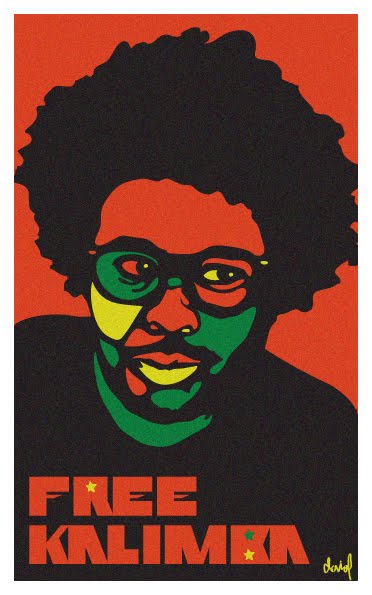
I can’t remember now who started making “Free” t-shirts. They weren’t always the thing to do when someone famous got locked up. If you aren’t stuck on the Spanish language tabloids, then maybe you didn’t hear about how Mexican authorities went on a questionable manhunt for pop singer Kalimba a little while ago. He was accused of raping an under age girl. Well, he’s free now and grinning an O.J. grin, only he probably really didn’t do it.
Kalimba first came to my attention sometime in 2009 when I was at a mega pop concert in Mexico City all the way in the nosebleed seats of Azteca Stadium. I could hear the crowd roar for this guy with his guitar hanging from his neck a mile up. He had that recognizable popstar quality that adolescents go crazy for. He’s plied his trade of singing and acting since childhood and is a regular on the Mexico City fashion scene.
I met him briefly during the Mercedes-Benz fashion event later that year. He was cordial, spoke good English and made a point to tell me that he was only 1/4 Cuban. Either way, skin color is always at the forefront when you’re in the public eye in a place like Mexico.
KALIMBA ART BY DANIEL ALVA.
As I sit here working procrastinating on my thesis project, memories of Mexico snap on my brain like pop rocks. First thing that always hits me is the memory of one of my best friends on my old Roma Norte block, Beba, above. By some odd measure of Google technology, you can actually see Beba in her favorite spot if you map my old address.

Next up is the Mexican appreciation for street art. In all its vandalistic forms.




Hip-hop is either really innovative nowadays, or returning to its pre-80’s roots. The elements that’ve grounded hip-hop culture for the past three decades fell out of vogue on the home turf some time ago. Rappers over 40 see more paper by going to Europe than during a Rock the Bells tour. (Dave told me something to that effect.)
In Mexico, where hip-hop culture is trapped in a kind of pre-mainstream fabric that used to house it here in the U.S., the second installment of a beatbox contest will have its second competition. Beat boxing isn’t something you see a lot of rappers doing these days. It’s relegated to a Justin Timberlake gimmick. But for all you 80s babies, you know how often you’d hear someone beat boxing on the subway or on TV:
Beatbox Battle Mexico is the brainchild of Berlin b-boy, beat boxer Dj Mesia. He’s an ambassador for American-style hip-hop, and travels the world doing workshops and competitions. Two years ago, I traveled to the middle of nowhere in the state of Mexico to a bar where Mesia was holding the first beatbox battle. It was an impressive presentation with highly practiced Mexico kids and a grown-ass man here and there, spitting rhythms into a mic and trying to belittle their competitors. I remember a Michael Jackson impersonator with a mean routine out beat-boxed the competitors. Mesia told me that trips to Mexico to meet up with a girlfriend inspired him to start a beat box competition there. While German ties with Mexico are a couple centuries old, it’s interesting to see this transnational effort to keep hip-hop culture alive in the world.
This event is seriously in the middle of nowhere in the state of Mexico. Good for the local kids and a hallmark of hip-hop’s travelling powers, but hard as heck to find if you’re unfamiliar with travelling outside of Mexico City. Luckily, someone made a map for this event.
If you live in Mexico and want to enter the contest, e-mail producer Speedy speedysrecords@hotmail.com.

It was a hardcore piece of ignorance when a Gangsta Boo-less Three 6 won an Oscar in 2006 for “Hustle & Flow”. At the time I was happy to see another non-conformist event at the Oscars. Tonight, while not nearly as non-conformist as gold-tooth wearing Southerners taking the stage at the Kodak Theater, Trent Reznor won an Oscar for a movie score that tugged on the strings of digital darkness more than selections from Daft Punk’s Tron: Legacy score, one of my favorite’s of 2010.
As any music fan knows, Reznor is the gee-O-dee of industrial rock. Along with a guy named Atticus Ross, who worked on an industrial jazz tech album called The Negro Inside Me (?!!!), Reznor crafted a score that pegs the inner darkness, “alienation and isolation” of a super nerd with extraordinary money-getting powers.
You can still download a free sampler of the The Social Network score, here. Take a listen:

 channibalsmith.com