

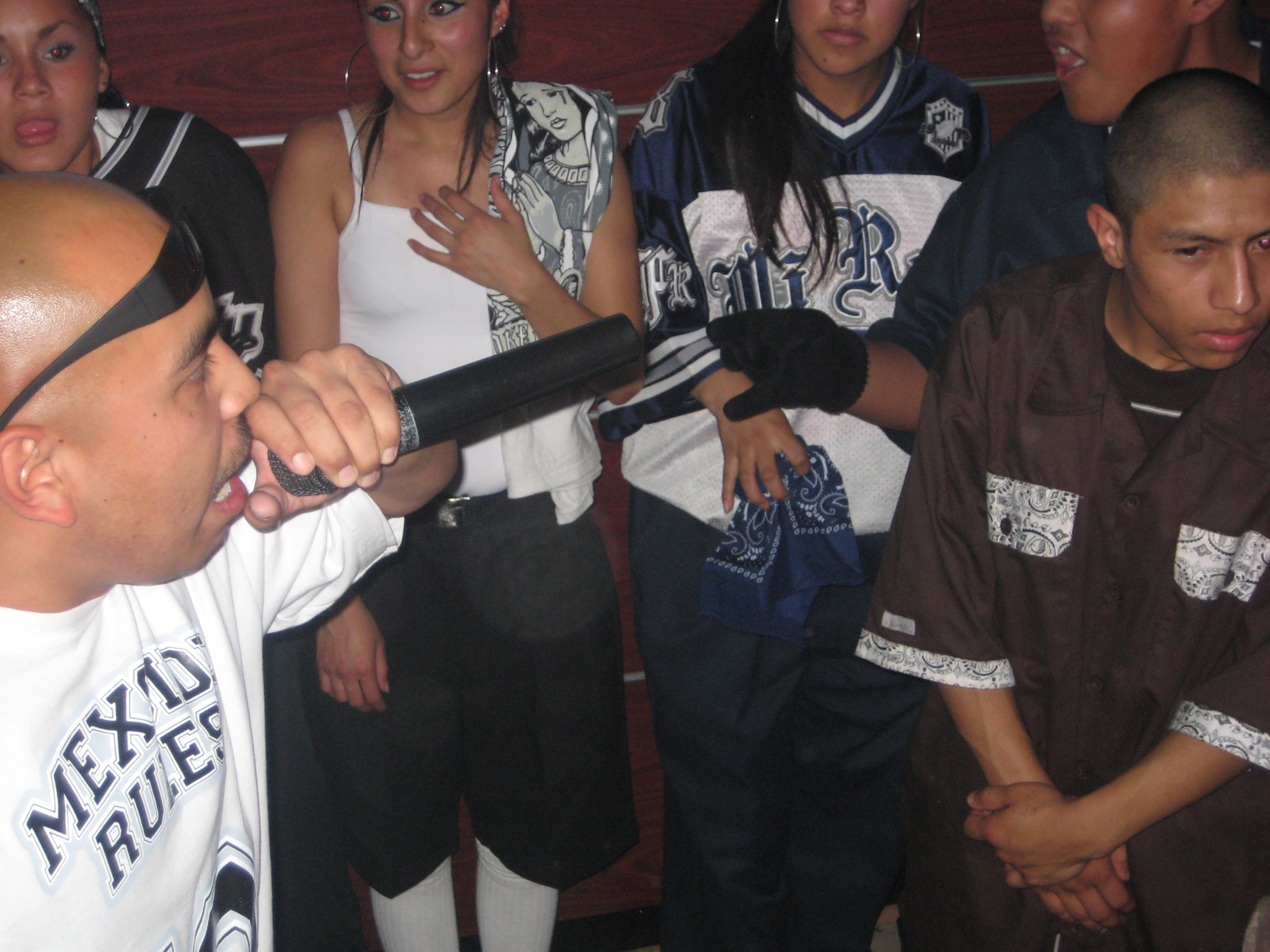
A hard-core rap concert takes place in a mall, just upstairs from a movie theater. No police presence to speak of and very light, but focused security.
Mexican rap (if it’s any surprise) thrives with its own sub-genres. You get the political message from a group like Advertencia Lirica, aging thug wisdom from MC Luka, the spirit of hipster D.F. gets a boost from Mood-Fu, and Pato Machete keeps heads nodding in his post-Control Machete years.
Nothing I’ve heard from groups like Kartel Aztlan or Cartel de Santa prepared me for a showcase of Chicano-style rap that I saw Sunday headlined by Kartel de las Calles along with acts like Neza’s El Plata Ramirez.

This was gangster culture as pop culture that I was witnessing (there was one vender selling Nike Cortez, Joker Brand bandanas, Dickies pants and dark sunglasses — a certain type of Mexican-American Apparel and the look of the SoCal cholo.)
Hip-hop culture is being used here to create an identity where rasta, emo, goth, punk, or sporting tight jeans and a colorful scarf just won’t cut it.

Concert-goers came from nearby places such as Naucalpan, Iztapalapa, Ecatepec, La Raza, and of course, Neza York (Ciudad Nezahualcóyotl) taking the bus or train in to commune with their peers.

There were young men and women with bandanas, jerseys emblazoned with “Los Angeles” in gothic text, “Sureño”, or the always ominous number “13” (as in the Mara kind) scrawled on their shirt backs, their necks, arms and hands.
Writing about the globalization of thug culture and cholo culture in Mexico is nothing new. I’m actually glad it’s been covered before.
Cholos grew out of Chicano, or Mexican-American culture, and found their greatest expression in East Lost Angeles.
Cholo style was most definitely a result of the Mexican immigrant experience in the southern U.S. as opposed to a style found in Mexico itself.
Wrote Jeremy Schwartz in a blog post about noted Mexico City photographer Federico Gama’s pictorial on Neza York cholos in the late 90’s.
Gama’s is a fascinating piece of work and you can see more here, following his bio.

It can seem like aping the culture created in Southern California, but without the high potential for danger associated with venues exclusive to gang-friendly crowds. Still, how can you judge how peer groups want to express their identity? Besides, with every “carnal” or “güey” that I heard, I realized this was Mexico’s young generation making cholo rap their own.
Here’s Teto’s set.
Plata Ramirez had good energy:
Sombras Urbanas also did their thing:
For more on other performers that played on Sunday check out:
Nasion Sureña Mexicana (NSM)
And for more info on cholo rap on it’s home turf, check out:
Looong list of Chicano rap artists
And what some of the smarter folks have to say about it.
IF that’s not enough, download this mixtape for healthy dose of Mexican rap:
 channibalsmith.com