Internationally Screwed & Chopped

—-

In about a month, certain parts of Houston and the world will remember the birthday of DJ Screw, and November marks the 10th Anniversary of his death.

Austin Surreal properly informed me recently about the latest DJ Screw spin-off, “Screwed Anthologies“. Think Nortec, but improvising over plodding bass lines and drooping renditions of popular rap songs. Go here, for an audio sample. The Houston-based musicians should be stopping in Ithica and Boston this week

In Mexico, there´s a reminder of Screw. It´s not in the super slow-paced way you handle bank transactions here, or the syrupy slow wait in the line at Wal-Mart Mexico. I´m talking about the wound down accordian-jamming sound of  cumbias rebajadas. Rebajada,  means to bring it down, as in the pitch.

The realm of digital cumbia isn´t complete without a walk in this slow dimension. There´s a certain gangster quality to listening to cumbia this way. Not unlike those guys in Texas who have Screw blasting out of their cars.

I´m interested in getting a good story together on the subject.  People on both sides of the border are discovering the music again, and again. But no clear answers as to what connects Screw to rebajadas, or if there´s a definitive creator for pitched down cumbia.

According to  Dr. Auratheft:

Story tells …. early low-key/ghetto cumbia gigs in Mexico would use really shitty/dysfunctional turntables, not only slowing down but also fluctuating. This launched a genre somehow and kids in Mexico are just all about rebajadas”.

Or are the origins of cumbia rebajadas as Toy Selectah told me in Austin a few months ago? He suggests that boomboxes at Monterrey block parties would slowly run out of batteries, leaving people to bailar to slowed cumbia.

Whatever´s true, most of what´s written about Screw dates chopped and screwed music to the early 90s, and rebajadas mixtapes are said to have been available since the 80s, coming directly from Monterrey DJs and making their way throughout Mexico y el mundo.  Let´s see if we can get this all on the record. Until then check out this rebajadas mix by Dr. Auratheft:

Rebajadas_El_Maldito Acordeón

And this 1998  chopped and screwed mixtape by Houston rap landmark Swishahouse:

Barre

Look here for normal cumbia.

Track listing for both mixes after the jump.
Continue reading “Internationally Screwed & Chopped”

I Know Huh X Wayneandwax X Postopolis!

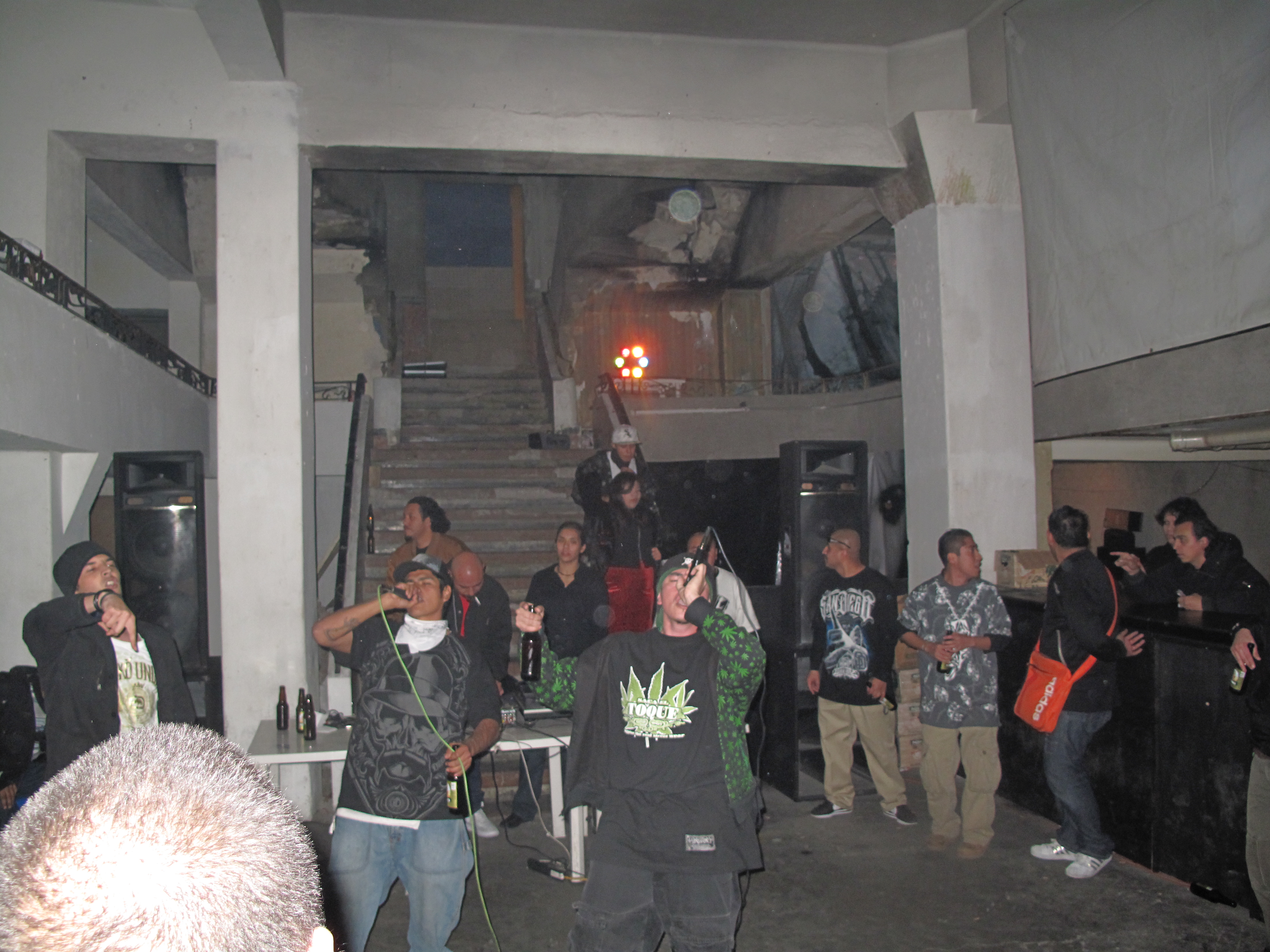
Above, Rapper 2Phase on the mic (center), at a January 2010, rap event near Centro.  It was a 7 hour rap show in a hall connected to Cría Cuervos, a punk/goth space. Pictured is the entire concert stage, the bar was off to the right.

For my presentation today, I invited 2Phase and Yoez. More about them during our chat, but I wanted to give a little background on why I chose these two, of the literally hundreds of rappers trying to get their voices heard in D.F.

2Phase was one of the first rappers I saw perform when I got here in the winter of 2008  (Listen to some tracks from his 1st album, here and here.). He was performing in another punk space, El Under, in Colonia Roma. The reason why I picked him is because, first, he speaks English. And, two, he´s not only a rapper, but a producer for Revolver Productions. I felt that he could talk about, not only the rap scene, but also the technical aspects of production and getting product and merch out to the masses.

Yoez is a rapper I heard a lot about, because she was a member of D.F.´s  first all-girl rap group Rimas Femininas. I researched this group for a story that appeared in Latina magazine, but I never got a chance to talk to Yoez. Her work is personal and she´s got a stage presence that can´t be ignored. I´ve seen her destroy crowds at Foro Alicia, usually over some heavy West Coast beat.

*Super shouts to Wayne Marshall for inviting me as a guest.

Beat conductors Postopolis!

Sometime ago, Harvard stopped producing Simpson´s  writers and started producing DJs. Above, the byproducts of the late 90s.  To the right, the Pitchfork-approved, globetrotting soundboy intellectualDJ/Rupture. To the left, the M.I.T. professor and ethnomusicologist whose curiosity about Mexican rap gave this blog a humongous boost. Thanks for including us, Wayne (Friday at 5:30 pm, CDT), live streaming.  Party on.

For upcoming Mexico City gigs featuring this Postopolis! duo,  check here.

Tepito Owl

Around this time last year on a Sunday, late summer, I made a trip to Tepito with the homie Mazaki from Japon. Strolling through this legendary, chaotic, historical, and powerful black market, one thing ( in the mountains of sneakers, clothes, DVDs and .99 Store  musthaves) grabbed my eye . The Tepito owl.

There was a young street kid, hustler, with a bird cage strapped around his neck. I disregarded the other exotic birds sitting in the cage as regular parrots, which they probably weren’t. The thing that seemed unreal to me for the first minute, was the miniaturized owl perched on the edge of the cage. No way. I snapped a quick flick with my BlackBerry , slick as can be.

Or so I thought. Photos are prohibited in this (black) market area. About an hour later the same kid walks up to me. Was he tracking me down? I thought he might try to get his Education of Sonny Carson (1974) on, really step on my line. But he basically told me off for taking his picture while he was illegally pushing exotic animals. It was cool to see the baby owl again, though.

I just told him that was a dope owl and it needed its picture taken. He understood, I think. And no one was cut.

Makes me marvel at the market savvy of these Tepito hustlers. I’m thinking they were building off the popularity of Harry Potter. How serious would that be for a kid if her dad brings her home a pet owl, just like the characters in the book?

Well, now you know where to go America.

Continue reading “Tepito Owl”

Google Video pick of the week #011

—-

In my neighborhood, when the jack hammers and tractors get rolling at 2 a.m. you know they won’t stop until well after 5a.m.  I try to ignore it, just bury my head under my pillow a little deeper, until I muffle all the sound. I’m not too light of a sleeper, but some nights these past two months, it got hard to sleep. Here’s why. And for that, I’m not trippin.

That is to say … I know that sound.

It’s not  just an annoying 10 ton clatter that makes its way up and down Cuauhtémoc Ave. It’s more than that.

It’s the sound of progress. Road infrastructure, public transit, just .38 cents and you’re home.

It’s that Westside extension putting a hole in Beverly Boulevard.  And it’s something like the Metro Rapid in the Valley, except out here you MUST pay to get on.

It’s also the extension of the Metrobús in Mexico City.

Which brings me to this week’s GVP. I picked the documentary, Bogotá: building a sustainable city, not because Brad Pitt narrates it, but because it’s about Bogotá, Colombia. Maternal lands.

You see, Colombia, along with Brazil were the forebearers to the style of bus service called BRT that Mexico has been recently using. It started out as a model of sustainable design, and now is a way of life that’s growing and costing lots of money.  Colombia’s Transmilenio was the first BRT I ever rode on back in 2006, when I visited.

So, check out the video, below, and learn what Bogotá can be like.  I’ll be fighting mucho ruido trying to hold on to at least a few hours of REM sleep. All in the name of progress.

—-

San Judas and Reggaeton

__

__

What started out as just wanting to share a mini documentary called “San Juditas…Power!” (2008),  above, turned into an encounter with fan sites, and forums, focused on big-time hate for reggaeton.

*add (5/20): According to the video, the San Judas “cult” is a transnational phenomenon that started in Chicago,  and later made its way to Mexico. As the director tells me, “Es el santo para los ladrones.” He’s the thief’s saint.

I haven’t paid too much attention to the San Judas followers, since moving to Mexico City. But it’s obvious that most of the young people you see on the train, toting their horned Jude statues, and heading for Templo de San Hipólito every 28th day of month, are from the outskirts, and some of the roughest areas of the D.F. metro area.

According to Catholic.org, San Judas Tadeo, or Saint Jude Thaddeus

…is invoked in desperate situations because his New Testament letter stresses that the faithful should persevere in the environment of harsh, difficult circumstances, just as their forefathers had done before them. Therefore, he is the patron saint of desperate cases and his feast day is October 28.

The anti-reggaeton sentiment, I think, is more classist than anything. The reggaetoneros are viewed as thugs and neardowells, when in fact, most are just young kids among the desperate and needy whom San Judas is supposed to protect. Albeit with airbrushed and rhinestone caps.

One Facebook fan site, is filled with pictures tagged with racist and mean captions and comments.  Odiamos a todos los reggaetoneros ke van a la iglesia de San Judas los 28’s (We hate the reggaeton fans who go to the San Judas church on the 28ths) has over 4,000 fans.

You can see a few of its mocking portraits below, and after the jump. There tends to be special distaste for reggaeton’s doggy dance or perreo that the kids do.

___

There’s a last.fm group called “Anti-Reggaeton”.

Below, an undated, partial newspaper clip about the subgroup that makes up so many San Judas followers.

Continue reading “San Judas and Reggaeton”

Cotton Club Legend

Hand me a late pass, but I would’ve felt remiss if I didn’t dedicate a few blog lines and Youtube clips to this month’s passing of the great Lena Horne.

L.A. culture crit, Ernest Hardy, dedicated a moving and quote-filled post to the lady on his blog, Blood Beats.

For me, she was a face I was most familiar with in the late 70s and early 80s, via episodes of the Muppet Show and the Cosby Show (I was one of those kiddies raised in front of the tube). I figured why not share that cultural memory, while these clips are still available.

The Cosby Show (1985) “Cliff’s Birthday”

Muppet Show Season 1, Episode 11-Lena Horne

Continue reading “Cotton Club Legend”

Machete vs SB1070

I enjoy seeing popular entertainment take a stand against injustice.

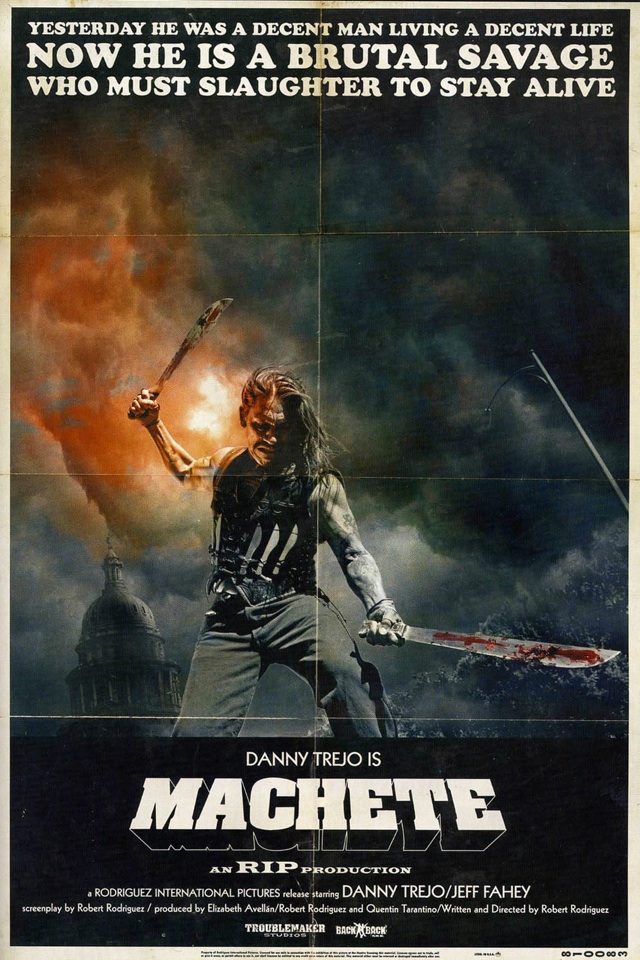
Last week, Robert Rodriguez released a mock trailer for his upcoming “Mexploitation” film, Machete, and aimed it directly at the home state of SB1070.

One thing that popped out at me was the Jessica Alba  line near the end:

“We didn’t cross the border, the border crossed us.”

It also struck a chord with a lot of Spanish-language media. And that was perhaps because it sounded like a line from a 2001 Los Tigeres Del Norte song, “Somos Mas Americanos“.

“Yo no cruce la frontera, la frontera me cruzó”

Here are the translated lyrics to the song.

Of course, me…I immediatley thought of  the Malcolm X line:

We didn’t land on Plymouth Rock, the rock was landed on us.”

You can see it below. As you do, think of what’s going on in Arizona, and the plight of poor people who go there for work, for better opportunities; and then think about what SB1070 is trying to do. Reminds you a little of Jim Crow. Doesn’t it?

Here’s the Denzel version (starts at 07:18-07:32)

Shouts to Cypress Hill for cancelling their May 21 show in Tuscon in protest.

Norebangin in Mexico

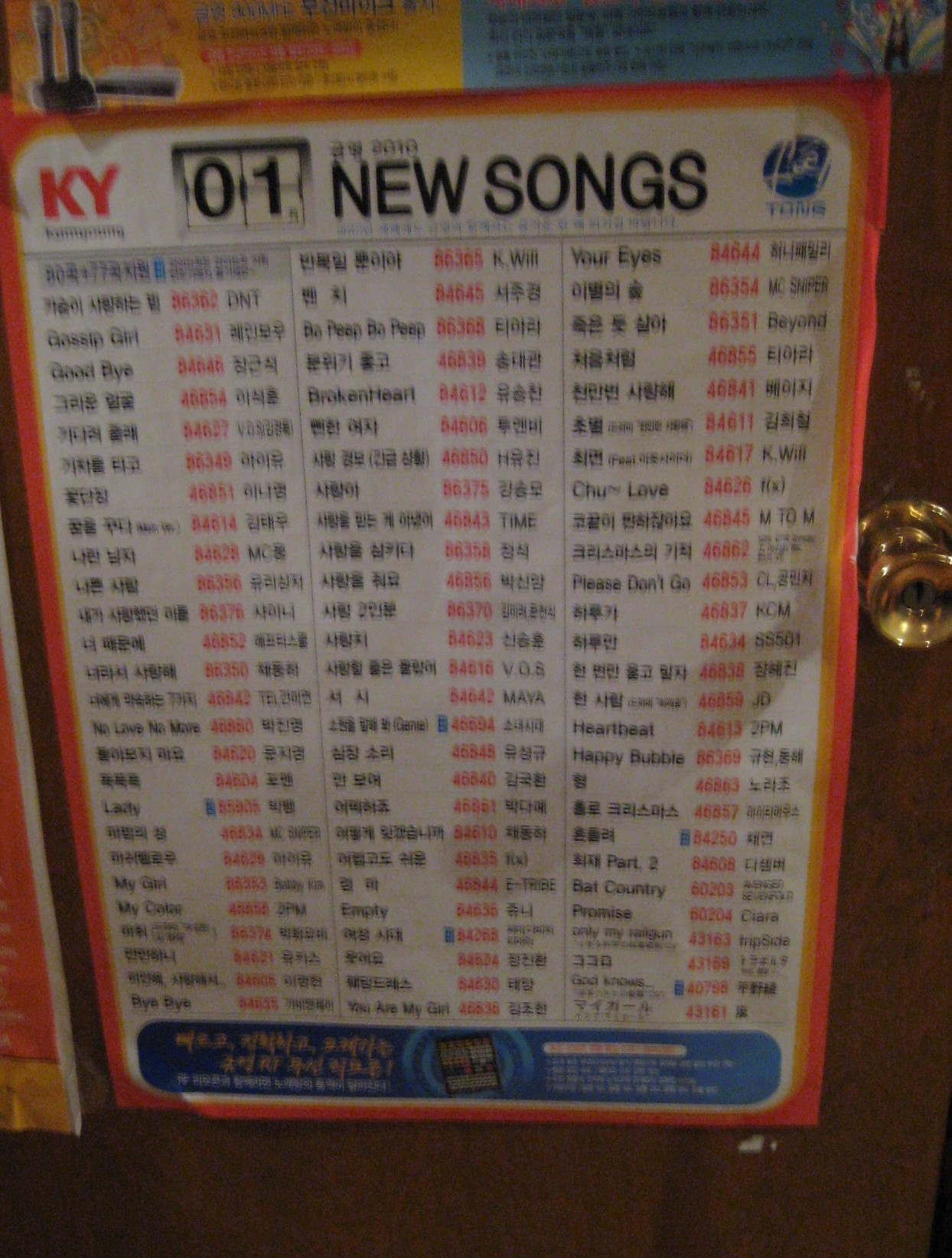
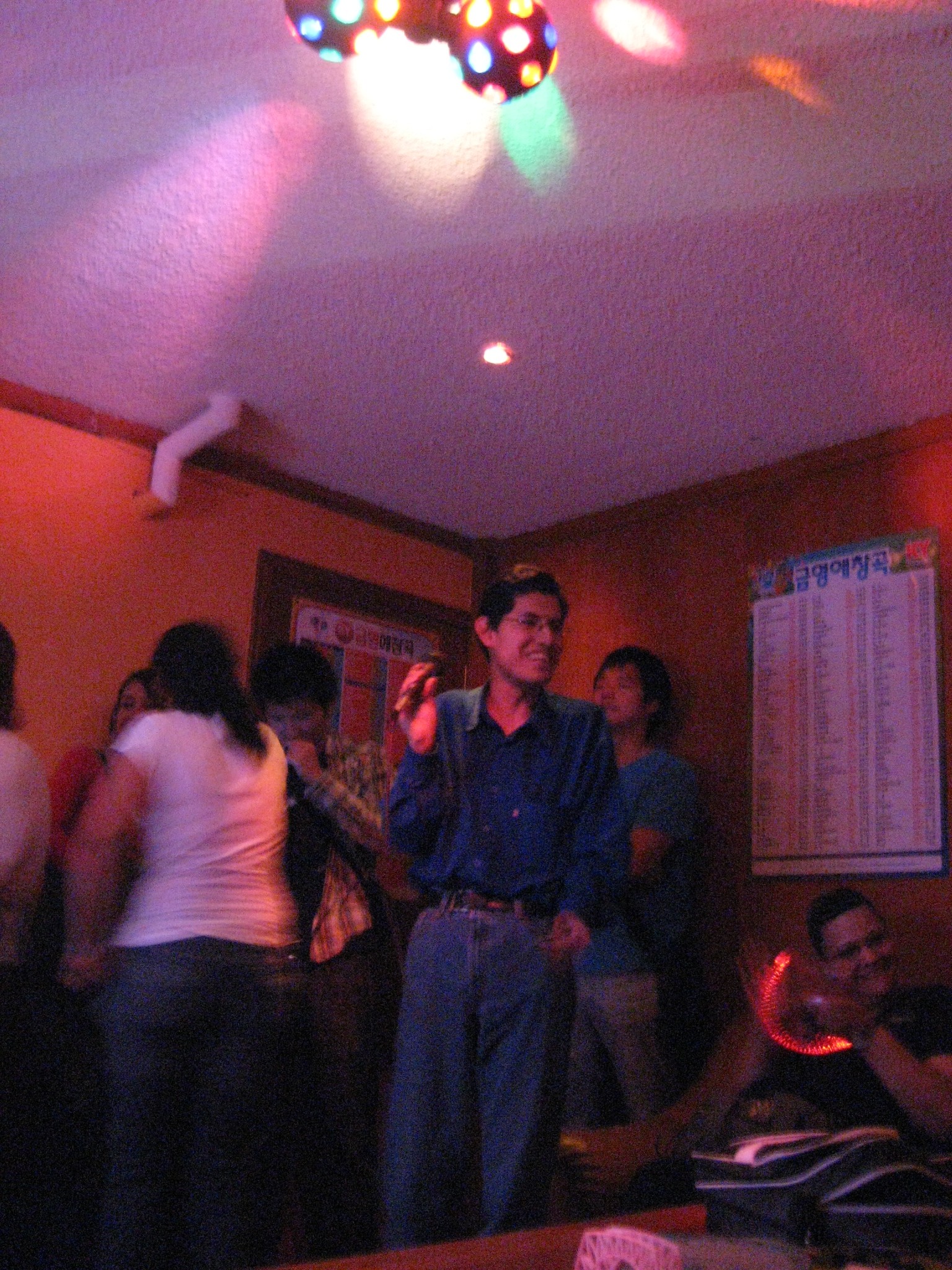
The sizable Korean community in Mexico City’s Zona Rosa (among other places) wouldn’t be complete without norebangs. These are rooms you rent with a squad of karaoke revelers. The rooms come with mood lighting, multiple microphones, tambourines, rotating disco light, a large karaoke hard drive and a flat screen TV with a mega karaoke remote.

Speakers are studio sized and beer is available for about $40 pesos a pop, with a huge plate of fruit running around $250. Other side dishes at some norebangs in the area offer chicharron de pulpo, which is some kind of fried octapus treat, if you’re into that.

It’s easy to go norebang hopping, if you find yourself spending a weekend in Zona Rosa. I landed in one for a short spell (couldn’t get to my rendition of  “Livin on a Prayer”), London Karaoke, which was run by  a middle aged Korean man with a casual hunting-cap and bubble vest kind of style, named Park Hyo Yong. The price per hour for a norebang runs around $200 pesos, less than 20 bucks in U.S. cash.

For me, my karaoke thrills are best had at a venue with lots of strangers. I’m not into the tiny room thing, although it’s a great place to practice your stuff. Because  if you’ve had the odd experience of being caught up with a group of trilingual karaoke experts who bogard the mic and the karaoke controller, I feel your pain.

London Karaoke, Londres No. 167, 3 Piso, Esquina Florencia, Mexico, D.F., Telephone: 52-07-01-84

Google Video pick of the week #009

Beat This: A Hip Hop History” (1984), was a BBC program that debuted the same year as another GV gem, “Beat Street”.

With the same stodgy wikipedia tone as all its other culture docs, this BBC piece takes us to the streets of the BX, then back to Manhattan, to hear the late Malcolm McLaren tell it to a group of B-Boys about how hip hop culture came to him. He goes at around 09:40.

The doc is narrated with the butter smooth tone of Imhotep Gary Byrd, and done up like a live radio broadcast cum history video.

Afrika Bambaata fans can rejoice, too. It’s packed with rare raw footage from the era that really set it off for hip-hop.